سورس کد adbGUI Wrapper برای Android Debug Bridge (ADB) نوشته شده در C# سی شارپ
این توضیحات بصورت خودکار ارسال شده است برای دانلود فایل به سایت اصلی که لینک دانلود در پایین قرار داده شده است بروید
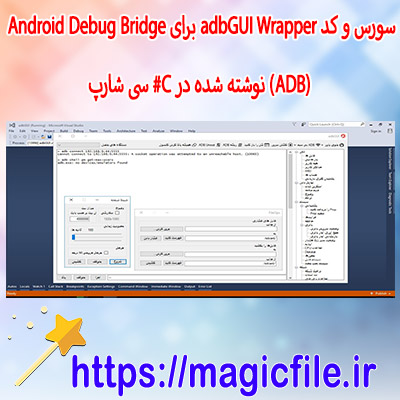
SOURCES CODE ADGUI WRAPPER FOR ANDROID DEBUG BRIDGE (ADB) IN C#
Introduction to ADB and its Significance
Android Debug Bridge, commonly abbreviated as ADB, is an essential command-line tool that acts as a bridge between a computer and an Android device. It serves as a powerful utility that developers and enthusiasts utilize extensively for debugging, installing apps, copying files, and executing commands directly on Android devices. Given its versatility, ADB becomes indispensable in Android development, troubleshooting, and automation workflows. However, despite its robust capabilities, working directly with ADB through command-line interfaces can sometimes be complex, especially for those who prefer automated or graphical solutions.
The Need for a Wrapper and Graphical Interface
While ADB itself is quite potent, its command-line nature presents certain challenges. Users often need to remember specific commands, deal with syntax intricacies, or automate repetitive tasks. To streamline this process, developers have created wrapper applications—tools that encapsulate ADB commands within a more user-friendly, graphical interface. These wrappers simplify interactions, reduce errors, and expand accessibility for users of varying technical expertise.
Introduction to adbGUI Wrapper
Among these tools, the adbGUI wrapper stands out as a comprehensive, intuitive interface built using C#, a powerful programming language renowned for its robustness and versatility. This wrapper essentially acts as a layer over ADB, translating user actions into precise commands, executing them seamlessly, and providing real-time feedback within the application window. By doing so, it minimizes the need to manually type commands, enhances user experience, and accelerates tasks like device management, app installation, log viewing, and more.
Technical Foundations in C#
Developing an adbGUI wrapper in C# involves leveraging several core components of the .NET framework. The application typically uses Windows Forms (WinForms) or Windows Presentation Foundation (WPF) for designing a responsive, user-friendly graphical interface. These frameworks enable the creation of buttons, dropdowns, progress bars, and status panels, which collectively facilitate smooth interaction.
At its core, the wrapper interacts with the ADB executable—usually located within the Android SDK directory—by executing command-line processes asynchronously. This process involves spawning new system processes, passing command arguments, capturing output streams, and parsing responses. To ensure real-time communication, the application often employs event-driven programming, where output data triggers updates in the interface, such as displaying logs or status messages.
Key Features and Functionalities
A well-designed adbGUI wrapper incorporates a myriad of features tailored to enhance device management:
- Device Detection and Management: The wrapper detects connected Android devices via ADB, displaying device IDs and statuses. Users can select a specific device when multiple are connected, ensuring commands target the correct hardware.
- Installation and Uninstallation: Installing APK files onto devices becomes straightforward, with options to browse for files and execute installations with minimal effort. Similarly, users can uninstall apps by package name.
- File Transfer Operations: The wrapper simplifies copying files between the PC and Android device. Drag-and-drop functionality or file dialogs facilitate easy file selection.
- Logcat Viewing: Real-time viewing of device logs, enabling debugging and troubleshooting, is integrated into the... ← ادامه مطلب در magicfile.ir